In the highly competitive world of precision manufacturing, the margin for error is virtually nonexistent. Whether you are planarizing semiconductor wafers, finishing aerospace components, or polishing advanced optical glass, the quality of your abrasives dictates the quality of your final product. For procurement managers and process engineers, selecting the right polycrystalline diamond powder supplier is not just a purchasing task—it is a critical engineering decision that impacts throughput, yield rates, and overall manufacturing costs.Navigating the complex landscape of superabrasives requires a deep understanding of material science, application compatibility, and supplier capability. This comprehensive guide is designed to move beyond basic product descriptions, offering technical decision-makers the exact criteria and superabrasive diamond powder quality factors needed to source the highest performing PCD powder for polishing, lapping, and grinding applications.
Abrasive selection is heavily driven by the specific application scenario. Different substrates react uniquely to the cutting behavior of superabrasives. Here is a detailed look at how PCD powder for polishing, lapping, and grinding is applied across core industrial sectors.
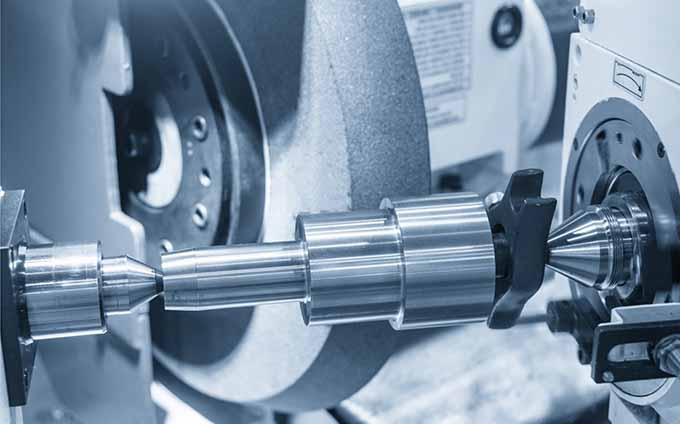
In the heavy-duty machining world, tooling materials like tungsten carbide present unique challenges due to their extreme hardness and brittleness. PCD powder is extensively used for lapping tungsten carbide tools and cutting inserts polishing. The self-sharpening nature of the polycrystalline structure ensures that as the carbide wears down the abrasive, new sharp edges are continuously formed. This guarantees a consistent cutting rate and allows manufacturers to achieve mirror-like finishes on cutting inserts, which directly translates to reduced friction and longer tool life for the end-user.
The optics sector requires near-perfect surface integrity. When dealing with sapphire polishing or lens surface finishing, even a microscopic scratch can render an expensive component useless. Polycrystalline diamond is ideal here because its rough, multi-crystalline surface acts like a miniature grinding wheel rather than a single sharp blade. This allows for a smoother, more uniform material removal process. It aggressively attacks the hard sapphire substrate without penetrating too deeply into the material, preventing sub-surface damage that could compromise optical clarity.
Nowhere are the stakes higher than in the semiconductor space. Wafer planarization (specifically in Chemical Mechanical Polishing or CMP processes for silicon carbide and gallium nitride wafers) and micro-surface finishing require abrasives that are both aggressive and gentle. In many advanced CMP applications, polycrystalline micron diamond is preferred because its ultra-fine particle structure enables highly controlled material removal while minimizing surface defects on sensitive semiconductor wafers. The absence of cleavage planes in PCD means there are no catastrophic particle breakdowns that could release oversized, razor-sharp shards into the polishing slurry. This virtually eliminates the risk of "rogue scratches" on expensive semiconductor wafers, ensuring higher die yields and flawless planarization.
In modern manufacturing, precision is paramount. The fabrication of aerospace components (like turbine blade root coatings) and high-precision molds (used in injection molding for medical devices) requires abrasive solutions that offer absolute consistency. PCD powder is utilized in the final lapping stages of these components to achieve strict geometric tolerances and ultra-low surface roughness (Ra) values, ensuring components can withstand the extreme pressures and temperatures of their operating environments.
For procurement professionals and process engineers, evaluating a polycrystalline diamond powder supplier goes far beyond comparing price tags. The true cost of an abrasive is measured by its impact on your production yield, machining time, and defect rate. Here are the top 7 superabrasive diamond powder quality factors you must evaluate.
Particle Size Distribution is arguably the most critical metric for any lapping or polishing grade powder. The uniformity of the powder directly affects the surface finish quality. A narrow, tightly controlled PSD means that almost all particles are doing an equal amount of work. If the PSD is too broad, oversized particles will create deep, unrecoverable scratches, while undersized particles will simply float in the slurry without contributing to the material removal rate. Engineers should demand detailed PSD charts (D10, D50, D90 metrics) from their supplier to ensure batch consistency.
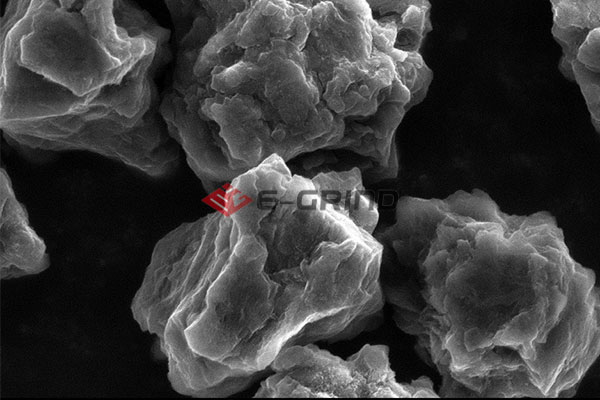
The fundamental advantage of PCD lies in its micro-crystallite bonds. However, the stability of this structure depends entirely on the synthesis process used by the manufacturer. High-quality PCD possesses a balanced crystal structure that determines its wear resistance and grinding efficiency. If the molecular bonds are too weak, the powder breaks down too rapidly, turning into useless dust. If they are too strong, the powder loses its self-sharpening ability.
Industrial diamond synthesis inevitably involves metallic catalysts and other chemical by-products. The purity level of the final powder is a testament to the supplier's post-processing capabilities. Residual metallic impurities or unreacted graphite can drastically reduce polishing performance, cause chemical contamination on sensitive electronic wafers, or lead to agglomeration in liquid slurries. High-end suppliers utilize advanced acid leaching and chemical purification processes to achieve purity levels exceeding 99%.
Toughness in the context of superabrasives refers to the powder's ability to withstand impact without shattering. This is absolutely critical for high-load grinding conditions, such as the initial rough lapping of silicon carbide wafers or heavy metal alloys. A powder with high fracture resistance will maintain its structural integrity under extreme pressure, yielding a much more predictable and stable material removal rate.
The physical shape of the diamond particles dictates how they interact with the workpiece. Angular particles provide an aggressive cutting action ideal for high stock removal. Conversely, more blocky or rounded particles are preferred for final polishing stages because they roll evenly across the surface, producing a smoother, scratch-free finish. A reliable supplier can tightly control and sort the shape morphology to match your specific application needs.
There is no "one size fits all" in superabrasives. The selection between a lapping, grinding, or polishing grade depends on the suspension liquid (water-based vs. oil-based slurries), the pad material, and the substrate hardness. Your supplier should act as a technical consultant, helping you select the precise grade of PCD that aligns with your specific machining parameters.
In B2B manufacturing, inconsistency is the enemy of profitability. A powder that performs brilliantly in January but fails in March can derail entire production schedules. Batch traceability ensures industrial stability. You must look for suppliers who employ stringent Statistical Process Control (SPC) and can trace every batch back to its original raw material lot and processing parameters.
| Factor | Why It Matters | Industrial Impact |
| Particle Size Distribution | Affects surface finish uniformity | Precision control & eliminates deep scratching |
| Purity Level | Reduces chemical and physical defects | Higher yield rates on sensitive substrates |
| Toughness | Extends abrasive/tool life under load | Substantial cost reduction in consumables |
| Traceability | Ensures batch-to-batch consistency | Production stability and standardized SOPs |
The theoretical benefits of polycrystalline diamond powder mean very little if the manufacturer lacks the engineering capability to process it correctly.. The difference between a premium polycrystalline diamond powder supplier and a low-tier vendor lies entirely in their manufacturing and quality control ecosystem.
Advanced Manufacturing Systems: Producing perfectly graded powder requires state-of-the-art milling, shaping, and classification equipment. High-tier manufacturers utilize automated liquid sedimentation and air classification systems to isolate particles with nanometer precision.
Strict Inspection Process: Quality cannot be assumed; it must be verified. Leading suppliers employ dynamic light scattering (DLS) instruments, electron microscopes, and ICP-OES (Inductively Coupled Plasma) spectroscopy to verify particle size, shape, and purity before any batch leaves the facility.
Batch-to-Batch Consistency: Through automated systems and strict environmental controls (temperature and humidity regulation in the grading rooms), top suppliers ensure that the powder you order today performs exactly like the powder you ordered five years ago.
Surface Treatment Technologies: Advanced suppliers offer proprietary surface modifications, such as specialized coatings or chemical treatments, that enhance the diamond's dispersion capabilities in various slurry bases, preventing clumping and improving cutting efficiency.


 English
 日本語
日本語 한국어
한국어 français
 Deutsch
 Español
 italiano
 русский
 português
 العربية
 tiếng việt