In the realm of precision manufacturing, the difference between a flawless component and a costly reject often comes down to the microscopic abrasives used in the final stages of production. As industries push the boundaries of what is possible—manufacturing thinner semiconductor wafers, more durable aerospace components, and sharper medical instruments—the demands placed on superabrasive materials have never been higher. For industrial buyers, procurement managers, and process engineers, sourcing these materials is no longer a simple purchasing task; it is a critical strategic decision. This guide explores how to identify, mitigate, and eliminate procurement risks when sourcing high-performance superabrasives.
To strip away the marketing jargon and assess the true engineering value of a superabrasive powder, procurement teams must evaluate specific, measurable quality indicators.
PSD is the defining metric for lapping and polishing powders. You should never accept a simple "average micron size." You must evaluate the D10, D50, and D90/D99 values. The D50 indicates the median size, but the D99 indicates the presence of oversized, scratch-causing particles. A narrow PSD means the particles are uniform in size, ensuring that the grinding load is distributed evenly across all abrasive grains, leading to highly stable performance and predictable surface finishes.
Superabrasive synthesis involves high temperatures, immense pressure, and various metallic catalysts (like nickel, cobalt, or iron). Furthermore, the explosive synthesis of PCD can leave residual graphite. A premium supplier utilizes aggressive acid leaching and purification protocols to remove these metallic impurities and catalytic residues. High purity ensures the powder does not react chemically with sensitive substrates or interfere with resin bonding agents.
The shape (morphology) of the abrasive dictates its cutting action. Angular particles provide aggressive stock removal, while more blocky or rounded particles are suited for fine polishing. A reliable supplier uses shape-sorting technology to ensure batch-to-batch consistency in angularity and fracture behavior, ensuring the powder behaves exactly as expected during operation.
In high-speed grinding, temperatures at the cutting zone can exceed 1000°C. Buyers must evaluate the powder's thermal stability. If a diamond powder degrades or oxidizes at lower temperatures, it will prematurely carbonize and lose its cutting ability. High thermal stability is particularly crucial when purchasing CBN or coated diamond abrasives intended for heavy-duty metalworking.
An abrasive is only as good as its documentation. A stringent lot number system and production record tracking mean that if an issue arises on the factory floor, the supplier can trace the powder back to the exact synthesis run, identifying the root cause instantly.
| Parameter | Good Supplier | Risk Supplier |
| PSD Control | Narrow, tightly controlled, stable across batches | Wide variation, high percentage of oversized particles |
| Purity | Consistently high (low ppm of metallic residues) | Inconsistent, visually discolored, high metallic trace |
| Traceability | Full lot tracking from raw material to final packaged good | Partial tracking, or reliance on third-party opaque sourcing |
Knowing what to look for is only half the battle; knowing how to evaluate a potential partner is the other. Buyers should implement a structured assessment framework to filter out trading companies and low-tier manufacturers from genuine, high-quality producers.
Step 1: Manufacturing Capability
Do not just look at their product catalog; look at their production infrastructure. Do they possess automated milling, crushing, and shaping equipment? Do they utilize advanced air classification and liquid sedimentation systems to ensure production consistency? A supplier with high-end, proprietary equipment is far more capable of delivering tight tolerances than one relying on outdated machinery.
Step 2: Quality Control System
Quality must be woven into the fabric of the company. Look for current ISO 9001 certifications. More importantly, inquire about their inspection frequency. Are they testing every single lot, or just random batch sampling? Do they possess in-house SEM and laser particle size analyzers?
Quality must be woven into the fabric of the company. Look for current ISO 9001 certifications. More importantly, inquire about their inspection frequency. Are they testing every single lot, or just random batch sampling? Do they possess in-house SEM and laser particle size analyzers?
Step 3: Traceability System
A world-class supplier operates like a pharmaceutical company when it comes to batch record tracking. They should be able to provide detailed certificates of analysis (CoA) for every shipment, detailing the exact PSD, purity, and raw material origin of that specific container.
A world-class supplier operates like a pharmaceutical company when it comes to batch record tracking. They should be able to provide detailed certificates of analysis (CoA) for every shipment, detailing the exact PSD, purity, and raw material origin of that specific container.
Step 4: Technical Support
Superabrasives require fine-tuning. A supplier should offer robust application engineering support. Will they help you troubleshoot your lapping slurry formulation? Do they provide free sample testing to ensure the material matches your substrate perfectly?
Superabrasives require fine-tuning. A supplier should offer robust application engineering support. Will they help you troubleshoot your lapping slurry formulation? Do they provide free sample testing to ensure the material matches your substrate perfectly?A reliable superabrasive supplier must ensure consistency, traceability, and application-level technical support.
At E-Grind Abrasives, we understand that our customers are not just buying powder; they are buying peace of mind. We have built our entire manufacturing and operational philosophy around mitigating the exact procurement risks outlined in this guide. We focus relentlessly on long-term consistency and traceability in superabrasive production.
50+ Years Experience in Diamond & CBN: Half a century of engineering expertise allows us to anticipate industry challenges and formulate precise solutions.
Advanced Manufacturing Systems: We utilize proprietary, state-of-the-art crushing, shaping, and grading technology to achieve unparalleled particle uniformity.
Strict Batch Inspection: Our quality assurance laboratories are equipped with the latest laser diffraction and electron microscopy tools to verify every single parameter.
Full Traceability System: From the moment raw synthesis materials enter our facility to the moment the final bottle is sealed, every variable is logged in our digital ERP system.
Our risk mitigation strategy is a proactive, four-tier approach:
Raw Material Screening: We source only the highest-grade raw synthetic diamond and CBN, rejecting any lots with poor crystalline structure or high impurities.
PSD Control During Production: Continuous monitoring during the micronization and grading phases ensures our D10, D50, and D90 parameters remain locked tight.
Final Batch Inspection: Nothing leaves our facility without a comprehensive, lot-specific Certificate of Analysis.
Application Feedback Loop: Our engineering team works directly with your factory floor, adjusting surface treatments and morphologies based on your real-world machining results.
Every lot is traceable and tested to ensure consistent performance across industrial applications.
To put this into perspective, let's examine how procurement risk translates directly to the factory floor across different high-tech industries. Even small variations in powder quality can lead to severe operational bottlenecks.
Precision Polishing & Lapping: In the optics and photonics industry, using diamond powder with a wide PSD or severe agglomeration causes rogue scratches, haze, and sub-surface damage. This forces technicians to extend polishing times or scrap the component entirely. Understanding different diamond powder uses across polishing, lapping, and surface-finishing applications is therefore essential for maintaining product quality and minimizing production losses.
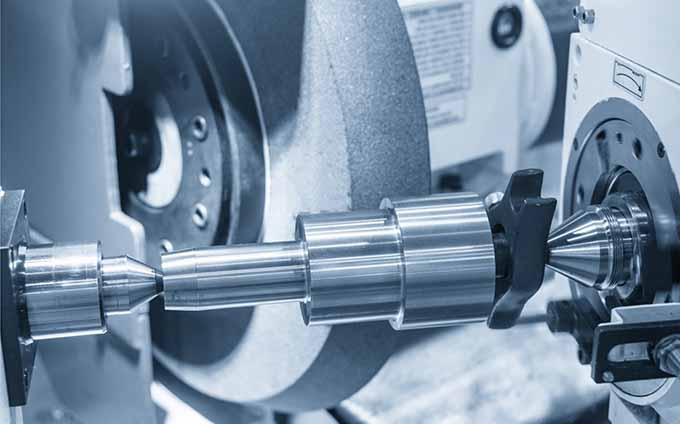
Grinding Wheels: Manufacturers of resin or metal-bonded grinding wheels rely on consistent morphology. If the diamond or CBN powder is too friable, the wheel suffers from tool wear instability, losing its shape and requiring constant truing and dressing. In many high-end grinding applications, polycrystalline diamond powder is preferred because its self-sharpening characteristics help improve wheel life and maintain stable grinding performance.
Semiconductor Materials: When planarizing silicon carbide (SiC) or gallium nitride (GaN) wafers, any metallic contamination or oversized particles in the CMP slurry lead directly to wafer defects, drastically lowering the die yield per wafer—a mistake that costs thousands of dollars per incident.
Sawing & Cutting: In the stone and construction sectors, variations in diamond toughness result in saw blades that glaze over or wear out prematurely, slowing down cutting speeds and increasing labor costs.
| Application | Risk from Poor Powder | Financial Impact |
| Precision Polishing | Scratches, haze, poor Ra | High scrap rates, rework cost increase |
| Grinding Wheels | Tool wear instability, form loss | Increased machine downtime, shorter tool life |
| Semiconductor CMP | Wafer defects, chemical contamination | Massive yield rate drop, revenue loss |
| Sawing & Drilling | Blade glazing, segment pull-out | Slower production speeds, higher consumable costs |


 English
 日本語
日本語 한국어
한국어 français
 Deutsch
 Español
 italiano
 русский
 português
 العربية
 tiếng việt