Nano-cubic boron nitride represents the next generation of superhard materials, surpassing even synthetic diamonds in hardness. With a Vickers hardness of 108 GPa, this material exceeds the 100 GPa of synthetic diamonds and doubles the hardness of conventional cubic boron nitride. Its unique nanostructure, achieved by compressing boron nitride particles at extreme pressures and temperatures, creates an interlocked atomic lattice that enhances resistance to deformation and puncture. This combination of properties makes nano-cubic boron nitride the hardest boron nitride known, ideal for industrial applications requiring extreme durability and precision.

The exceptional hardness of nano-cubic boron nitride is attributed to its nanostructured crystalline form. Scientists compressed boron nitride particles, resembling an "onion" or nested structure, at 15 GPa and 1800°C. These conditions forced the particles to rearrange into a dense, nanocrystalline lattice, where neighboring atoms share boundaries similar to tightly packed apartments. Reducing particle volume at the nanoscale increases the material's resistance to puncture and deformation. This structural innovation ensures that nano-cubic boron nitride retains superior mechanical strength while remaining stable at high temperatures, making it suitable for applications in cutting, grinding, and drilling of ultra-hard materials.
Nano-cubic boron nitride maintains its properties even under extreme thermal conditions, outperforming many traditional superhard materials. Its thermal stability allows it to withstand high-speed machining and abrasive operations without losing structural integrity. This makes it a reliable option for manufacturing tools that operate under intense heat and friction, such as cutting instruments for hard metals, alloys, and composites. The combination of thermal resilience and extreme hardness ensures consistent performance and longer tool life in high-precision industrial environments, where maintaining dimensional accuracy and surface finish is critical.
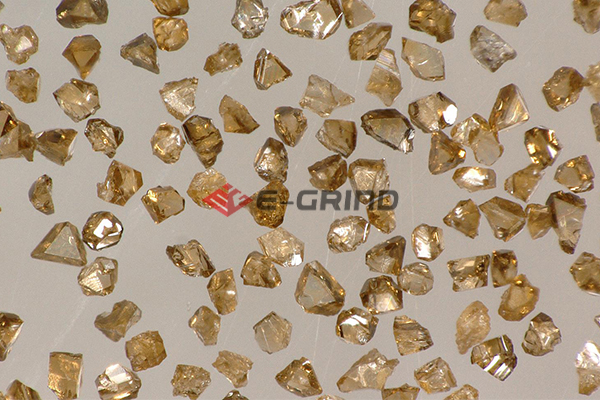
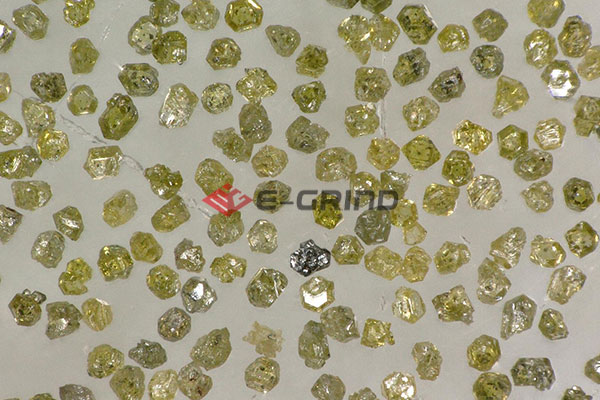
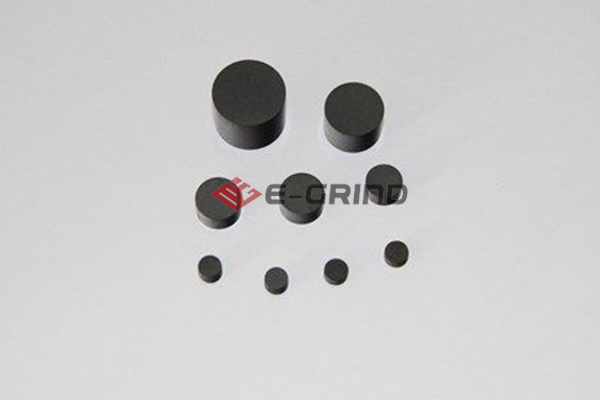
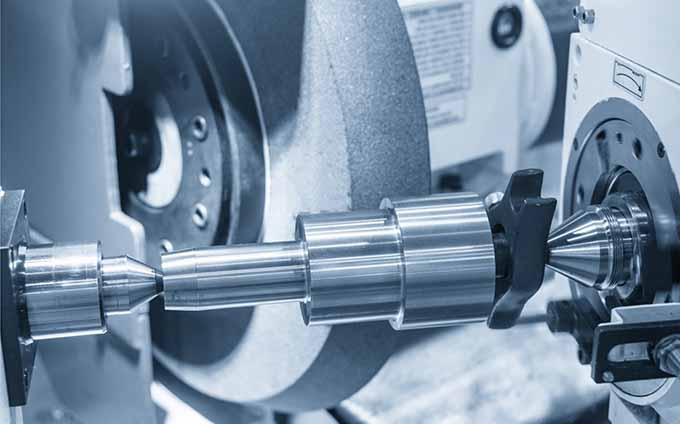
The hardest boron nitride has vast applications in industries demanding both strength and precision. In machining, nano-cubic boron nitride can be used for cutting, drilling, and grinding of superhard alloys and ceramics. Its properties make it suitable for high-performance scientific instruments, aerospace components, and electronics manufacturing. By offering both unmatched hardness and thermal resistance, tools incorporating nano-cubic boron nitride can achieve faster processing rates, improved surface finishes, and reduced tool wear. In many advanced manufacturing processes, cubic boron nitride powder serves as an essential material for producing high-performance cutting tools, abrasives, and wear-resistant components. These properties make it particularly valuable in industries such as aerospace, precision machining, and electronics manufacturing, where both durability and accuracy are critical. As a result, nano-cubic boron nitride continues to play an increasingly important role in improving efficiency and product quality across modern industrial production.
As nano-cubic boron nitride becomes more widely available, its applications are expected to expand across various high-demand industries. Its combination of extreme hardness, thermal stability, and structural uniformity allows engineers to tackle previously unmachinable materials. The hardest boron nitride also offers opportunities to enhance the performance of cutting, grinding, and drilling tools, improving precision and longevity. By integrating nano-cubic boron nitride into advanced manufacturing processes, industries can achieve superior productivity, surface quality, and operational efficiency, reinforcing its position as a critical material in next-generation industrial tooling.


 English
 日本語
日本語 한국어
한국어 français
 Deutsch
 Español
 italiano
 русский
 português
 العربية
 tiếng việt