In the highly competitive landscape of industrial manufacturing, B2B procurement is no longer just about securing the lowest price—it is about mitigating operational risk. When it comes to manufacturing high-performance grinding wheels and precision cutting tools, the quality of the raw abrasive materials dictates the success of the entire production line. For procurement managers, process engineers, and tool manufacturers, finding a reliable CBN mesh powder supplier is one of the most critical supply chain decisions they will make.A single inconsistent batch of abrasive powder can lead to severe manufacturing bottlenecks, increased tool wear, and catastrophic thermal damage to expensive workpieces. This comprehensive guide is designed from the buyer's perspective, exploring the technical nuances of cubic boron nitride, the crucial evaluation metrics for supplier vetting, and how selecting the right industrial CBN abrasive supplier ultimately lowers your Total Cost of Ownership (TCO) and elevates your manufacturing capabilities.
When auditing a potential superabrasive material supplier, procurement teams and engineers must look past marketing brochures and evaluate specific, measurable material characteristics. Here are the top six factors to scrutinize.
In industrial grinding, uniformity is everything. A tight and narrow particle size distribution ensures that every single grain on the surface of the grinding wheel shares the cutting load equally. For manufacturers using mesh cbn in high-precision grinding wheels, maintaining strict particle size consistency is essential for achieving predictable cutting performance and extended tool life. If the mesh distribution is wide, only the largest grains do the work, leading to rapid wear and poor finishes. Consistent mesh sizing is absolutely essential for automated production environments where machine parameters are locked in.
Not all grinding applications require the same crystal structure. Heavy-duty metal bond applications (like aerospace profile grinding) require blocky, incredibly tough crystals that resist fracturing under extreme pressure. Conversely, resin bond wheels used for finishing require highly friable crystals that micro-fracture easily to constantly expose sharp new cutting edges (self-sharpening). Your supplier must be able to customize the Toughness Index (TI) to match your bond system.
The thermal characteristics of the powder determine its performance during high-speed, dry, or minimal-coolant grinding. A high-quality CBN powder will resist oxidation and thermal degradation at extreme temperatures, ensuring the wheel continues to cut aggressively rather than glazing over and burning the workpiece.
The synthesis of CBN involves high heat, extreme pressure, and various catalysts. If the post-processing and acid-leaching steps are rushed, the final powder will contain microscopic metallic impurities or unreacted boron/nitrogen. These impurities weaken the crystal and severely reduce grinding efficiency. High purity ensures maximum bond retention and impacts the final surface quality positively.
For manufacturers complying with ISO 9001 or aerospace TS standards, an untraceable raw material is an unusable raw material. Important for industrial QA systems, batch traceability ensures that every bottle of powder can be linked back to its specific synthesis run. This ensures long-term process consistency and accountability.
An elite industrial CBN abrasive supplier does more than ship boxes. They act as an extension of your engineering team. They should provide detailed grinding recommendations, mesh selection guidance, and bond compatibility advice. If you are developing a new vitrified wheel for automotive gears, your supplier should be helping you formulate the exact abrasive mix.Procurement Evaluation Checklist
| Evaluation Item | Why It Matters for Buyers |
| Mesh Uniformity | Precision control, predictable Ra values, zero deep scratches |
| Crystal Toughness | Dictates tool life and self-sharpening behavior |
| Purity | Prevents chemical reactions, ensures highest surface quality |
| Traceability | Stable production, compliance with ISO/TS standards |
| Technical Support | Faster implementation, lower R&D costs for new tooling |
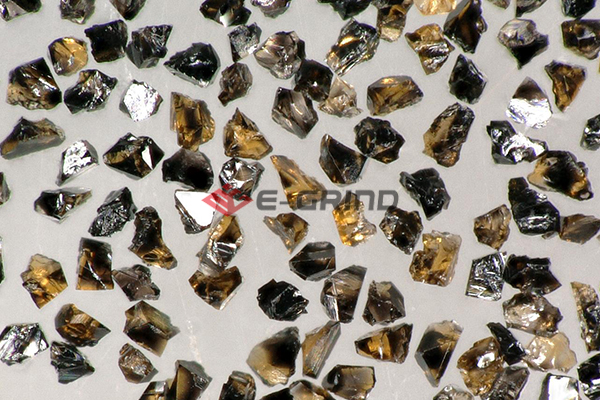
The superior characteristics of CBN have made it an irreplaceable consumable across a wide spectrum of high-stakes, high-precision industries.
Modern vehicles require incredibly tight tolerances to improve fuel efficiency and reduce noise. CBN wheels are the industry standard for gear grinding in transmissions, ensuring smooth engagement. Furthermore, it is the abrasive of choice for crankshaft and camshaft finishing, where high-volume production meets extreme precision requirements.
Bearings undergo millions of cycles of stress and must be perfectly smooth to prevent friction and failure. The hardened steel grinding required to create the inner and outer raceways of industrial bearings relies exclusively on the consistent cutting action and cool grinding temperatures provided by premium CBN mesh powder.
The tools that cut other metals must themselves be razor-sharp and durable. In the production of end mills, drills, and broaches, CBN is utilized for HSS (High-Speed Steel) tool sharpening and profile grinding. The abrasive easily cuts through the hard HSS without altering the tool's metallurgy through heat.
The aerospace sector utilizes exotic, heat-resistant superalloys (HRSA) like Inconel and titanium for turbine blades and engine components. The heat-resistant alloy machining required for these parts easily destroys conventional abrasives. High-performance cbn abrasives offer exceptional thermal stability, allowing for the efficient grinding of these tough aviation materials while maintaining dimensional accuracy and surface integrity.
Manufacturers of CNC guideways, ball screws, and medical devices require components with sub-micron accuracy. The ultra-precision grinding systems used to manufacture these parts depend on the absolute particle uniformity of high-grade CBN powders.
While conventional abrasives (Aluminum Oxide, Silicon Carbide) have a lower initial procurement cost, they fail to compete with CBN in high-volume or high-precision environments. The transition to CBN is an investment in manufacturing efficiency.
| Feature | CBN Mesh Powder | Conventional Abrasives |
| Hardness | Extremely High (Approx. 4500 Knoop) | Medium (Approx. 2000-2500 Knoop) |
| Heat Resistance | Excellent (Stable > 1000°C) | Moderate (Prone to thermal breakdown) |
| Tool Life | Long (Reduces tool changeovers) | Short (Requires frequent replacement) |
| Grinding Precision | High (Maintains wheel profile) | Standard (Loses profile rapidly) |
| Production Efficiency | High (Less downtime, faster feeds) | Lower (Constant dressing required) |
Trust in B2B procurement is earned through verifiable quality assurance infrastructure. The reason top-tier suppliers can guarantee their product is because they invest heavily in the backend systems that prevent defects from ever leaving the factory.
You cannot control what you cannot measure. A premier supplier operates an advanced quality control laboratory. This includes dynamic light scattering (DLS) equipment for exact particle size analysis, ensuring the D10, D50, and D90 metrics are locked in. They utilize ICP-OES spectroscopy for impurity testing, and high-powered Scanning Electron Microscopes (SEM) for crystal morphology inspection to verify the shape and angularity of the grains.
Consistency is maintained through rigid administrative and digital controls. Reliable manufacturers utilize ERP-driven lot traceability management. This means that every batch can be tracked—from the specific high-pressure synthesis run, through the crushing and grading phases, all the way to the final chemical surface treatment. This level of data transparency yields vastly improved industrial reliability for the end-user.


 English
 日本語
日本語 한국어
한국어 français
 Deutsch
 Español
 italiano
 русский
 português
 العربية
 tiếng việt