In industrial manufacturing, diamond materials are widely used because of their exceptional hardness, wear resistance and precision performance. However, not all diamond materials behave in the same way. The internal crystal structure directly affects cutting ability, toughness and suitability for different applications.
When comparing monocrystalline diamond and polycrystalline diamond, manufacturers need to consider factors such as machining requirements, surface finish and production conditions. Understanding the differences between these two diamond structures helps businesses choose the most suitable material for precision tools and abrasive applications.
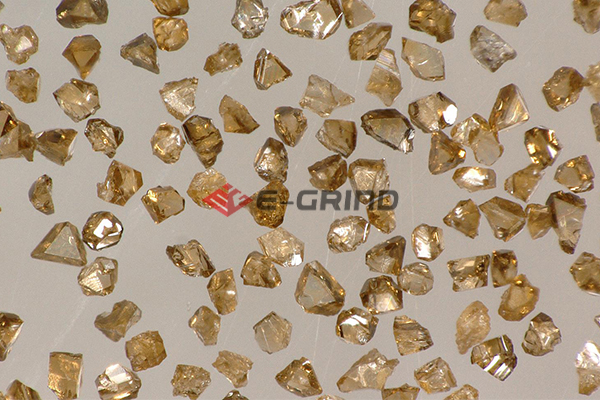
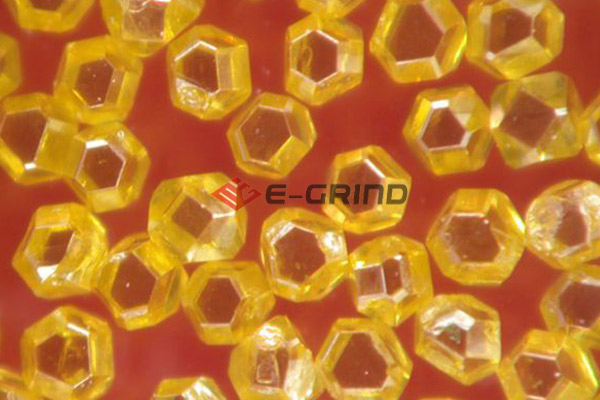
Monocrystalline diamond is a diamond material formed from a single crystal structure, where carbon atoms are arranged in a continuous and uniform lattice.
Because of its highly ordered structure, monocrystalline diamond offers excellent hardness and sharp cutting edges. These characteristics make it suitable for applications where extreme precision and surface quality are required.
Key characteristics include:
High cutting precision: A single crystal structure allows the formation of sharp and consistent cutting edges.
Excellent surface finish: It is suitable for applications requiring smooth and accurate machining results.
Stable performance: The uniform structure provides predictable cutting behavior.
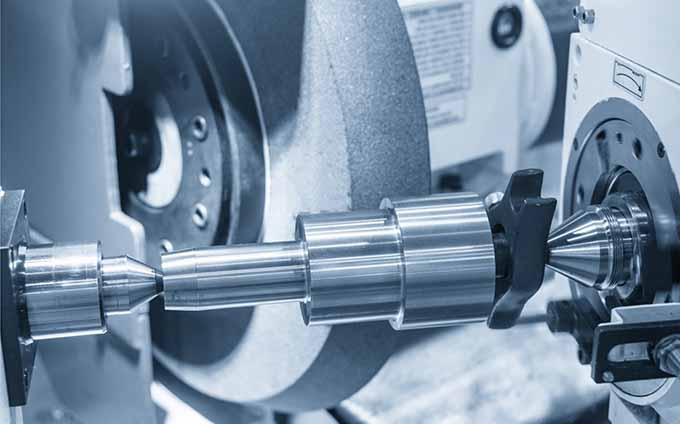
In industrial applications, monocrystalline diamond is often used for precision cutting tools, optical component processing and high-accuracy machining operations.
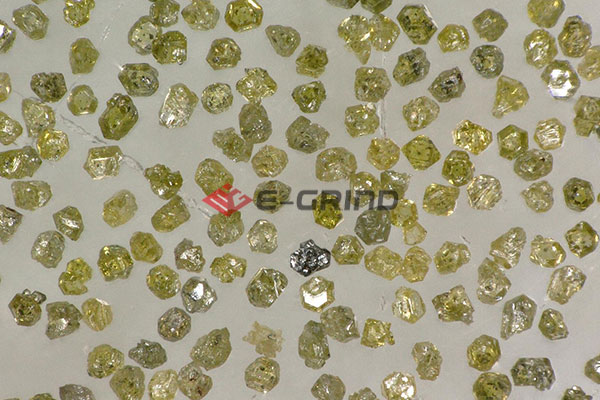
Polycrystalline diamond is made from multiple small diamond crystals combined together. Unlike single crystal materials, its structure contains many crystal orientations, creating multiple cutting edges.
This structure provides different performance advantages, especially in applications where toughness and impact resistance are important.
The main characteristics of polycrystalline diamond include:
Better resistance to impact during machining
Multiple cutting points for efficient material removal
Improved durability in demanding industrial environments
Due to its toughness and cutting behavior, polycrystalline diamond is commonly used in industrial tools, wear-resistant components and applications where continuous machining performance is required.
Different diamond structures provide unique advantages, making them suitable for different manufacturing requirements.
Monocrystalline diamond is often selected for high-precision cutting tools because its sharp edges can achieve excellent dimensional accuracy and surface quality.
Both diamond structures can be used in polishing applications. The choice depends on the required finish, material type and processing conditions.
Polycrystalline diamond is widely used in industrial machining because its multi-crystal structure provides stronger toughness and better resistance to mechanical impact.
Industries such as electronics, automotive manufacturing, aerospace and precision engineering often select diamond materials according to specific production needs.
| Feature | Monocrystalline Diamond | Polycrystalline Diamond |
|---|---|---|
| Structure | Single crystal | Multiple crystals |
| Cutting edge | Sharp and precise | Multiple micro edges |
| Strength | High precision | Better toughness |
| Application | Precision tools | Industrial applications |
The main difference between these materials comes from their crystal structures.
Monocrystalline diamond provides higher precision because of its uniform crystal orientation, while polycrystalline diamond offers improved toughness due to its multi-crystal composition.
For manufacturers, choosing between these materials depends on whether the priority is maximum precision or stronger durability during continuous industrial use.
The decision of polycrystalline vs single crystal depends mainly on the application requirements and machining conditions.
For ultra-precision machining where surface quality is critical, monocrystalline diamond may provide better results. For applications involving higher mechanical stress, polycrystalline diamond can offer improved durability.
Manufacturers should consider cutting speed, material hardness and operating environment. Different processing conditions can influence diamond performance.
If the project requires extremely smooth surfaces and tight tolerances, single crystal materials are often preferred. When productivity and tool life are more important, polycrystalline materials may be a better option.
The comparison of single crystalline vs polycrystalline materials should always be based on the actual production environment rather than selecting one material universally.
Superabrasives Powder provides professional diamond material solutions for industrial applications requiring consistent quality and reliable performance.
With expertise in diamond materials, the company supplies products designed for precision machining, polishing and advanced manufacturing processes. Different diamond structures and specifications can be selected according to application requirements.
For manufacturers looking for stable diamond materials, factors such as crystal structure, particle characteristics and processing needs are essential when evaluating suppliers.
Polycrystalline diamond generally provides better toughness and impact resistance because of its multi-crystal structure.
Yes. In industrial applications, monocrystalline diamonds are commonly produced through synthetic diamond manufacturing processes.
The better choice depends on the required surface finish, material being processed and polishing conditions.
Different manufacturing methods create different crystal structures, which influence hardness, toughness and cutting performance.
Yes. Diamond materials can be customized according to particle size, structure and specific application requirements.
Understanding the differences between monocrystalline and polycrystalline diamond helps manufacturers select the right material for their applications. While monocrystalline diamond offers excellent precision and sharp cutting performance, polycrystalline diamond provides stronger toughness and durability.
By evaluating machining requirements, surface finish expectations and operating conditions, businesses can make better material choices for cutting, polishing and precision manufacturing applications. Superabrasives Powder provides reliable diamond material solutions to support various industrial needs.


 English
 日本語
日本語 한국어
한국어 français
 Deutsch
 Español
 italiano
 русский
 português
 العربية
 tiếng việt