In precision manufacturing, surface quality and processing accuracy often depend on the performance of abrasive materials. Among advanced abrasive products, micron diamond powder is widely used for applications that require fine polishing, ultra-precision machining and consistent finishing results.
For manufacturers purchasing diamond materials, selecting the right micron diamond powder supplier is not only about product availability but also about particle consistency, material quality and technical support. Understanding different diamond powder types and evaluation factors can help buyers make more reliable sourcing decisions.
Micron diamond powder refers to diamond particles processed into extremely small sizes, typically used for precision grinding, polishing and surface finishing applications.
Compared with larger diamond grit, micron-sized particles provide finer cutting action and better control over surface roughness. This makes them suitable for industries where even small surface defects can affect product performance.
The main characteristics of micron diamond powder include:
Fine particle size for precise finishing
Excellent hardness for efficient material removal
Stable performance in demanding polishing processes
A reliable micron diamond powder supplier should provide consistent particle distribution, controlled quality and suitable specifications for different industrial requirements.
Micron diamond powder is commonly used in optical components, semiconductor processing, precision tools and advanced manufacturing industries.
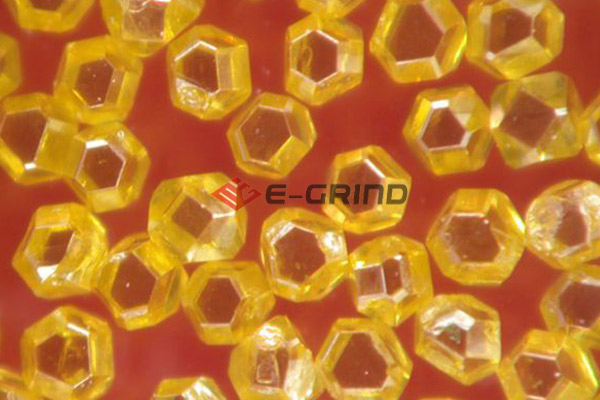
Monocrystalline diamond powder is produced from single-crystal diamond structures, offering sharp cutting edges and excellent precision performance.
Due to its uniform crystal structure, it is often selected for applications where surface accuracy and finishing quality are critical.
Common applications include:
Monocrystalline diamond powder helps produce sharp and accurate cutting surfaces, making it suitable for high-precision tool manufacturing.
In optical component production, surface smoothness is extremely important. Monocrystalline diamond powder can provide controlled polishing performance for lenses and precision optical parts.
Semiconductor manufacturing requires strict surface quality standards. Diamond powder is used in polishing processes where dimensional accuracy and surface consistency are essential.
The advantage of monocrystalline materials is their predictable cutting behavior, which makes them suitable for applications requiring high precision.
Unlike single-crystal diamond powder, polycrystalline micron diamond consists of multiple diamond crystals combined together. This structure creates multiple cutting edges and improves toughness during processing.
Polycrystalline diamond powder provides several benefits:
Better impact resistance
Multiple cutting points during polishing
Stable performance in continuous operations
Because of these characteristics, polycrystalline micron diamond is often used in applications where durability and efficient material removal are important.
For example, polishing processes involving harder materials or demanding production environments may benefit from the toughness of polycrystalline structures.
Choosing between monocrystalline and polycrystalline diamond powder depends on the required surface finish, machining conditions and production goals.
| Feature | Monocrystalline Powder | Polycrystalline Powder |
|---|---|---|
| Structure | Single crystal | Multiple crystals |
| Cutting action | Sharp edges | Multiple edges |
| Main Advantage | Precision | Durability |
Monocrystalline diamond powder is generally preferred when manufacturers need precise cutting performance and high-quality surface finishes.
Polycrystalline diamond powder is often selected when stronger durability and longer working performance are required.
There is no universal choice between these two materials. The correct option depends on the application, workpiece material and expected processing results.
When purchasing diamond powder for industrial use, buyers should evaluate a reliable micron diamond powder supplier based on several important factors.
Consistent particle distribution directly affects polishing quality and processing stability. A professional supplier should have strict control over particle size classification.
Diamond powder purity influences cutting efficiency and surface performance. High-quality materials help reduce processing variation.
Reliable suppliers should conduct testing related to particle distribution, material characteristics and product performance before delivery.
Different industries may require different particle sizes, concentrations or diamond structures. Suppliers with customization capabilities can provide more suitable solutions.
When comparing suppliers, buyers should consider not only price but also product consistency, technical experience and long-term supply reliability.
Superabrasives Powder provides high-quality diamond abrasive materials for precision manufacturing applications.
With professional experience in diamond powder solutions, the company supports customers with consistent material performance, customized specifications and technical assistance.
Whether the requirement involves monocrystalline diamond powder, polycrystalline micron diamond or other abrasive materials, selecting the right specifications is essential for achieving stable production results.
By focusing on quality control, particle consistency and application-based solutions, Superabrasives Powder helps industrial users improve polishing efficiency and maintain reliable surface finishing performance.
Micron diamond powder can be supplied in different particle sizes according to specific applications, including precision polishing and industrial finishing requirements.
Quality evaluation usually includes particle size distribution testing, purity analysis and performance verification.
Micron diamond powder is widely used in optical manufacturing, electronics, semiconductor processing and precision machining industries.
Yes. Professional suppliers can usually customize particle size, concentration and material specifications based on customer requirements.
Performance is affected by particle size, consistency, purity, diamond structure and the specific processing conditions.
Selecting the right micron diamond powder supplier plays an important role in achieving stable polishing and precision manufacturing results. Understanding the differences between monocrystalline diamond powder and polycrystalline micron diamond helps buyers choose materials based on actual application needs.
By evaluating particle consistency, quality control and customization capabilities, manufacturers can build reliable supply relationships and improve the efficiency of advanced surface finishing processes.


 English
 日本語
日本語 한국어
한국어 français
 Deutsch
 Español
 italiano
 русский
 português
 العربية
 tiếng việt