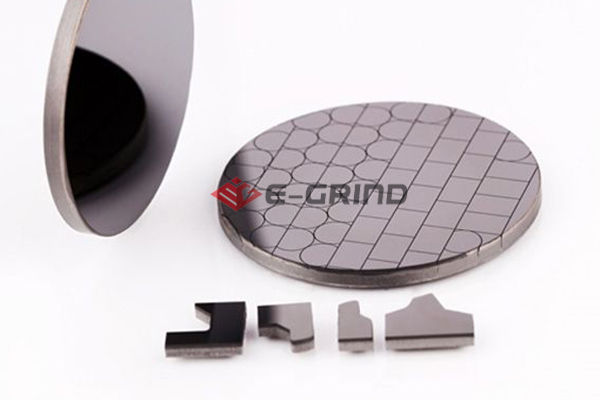
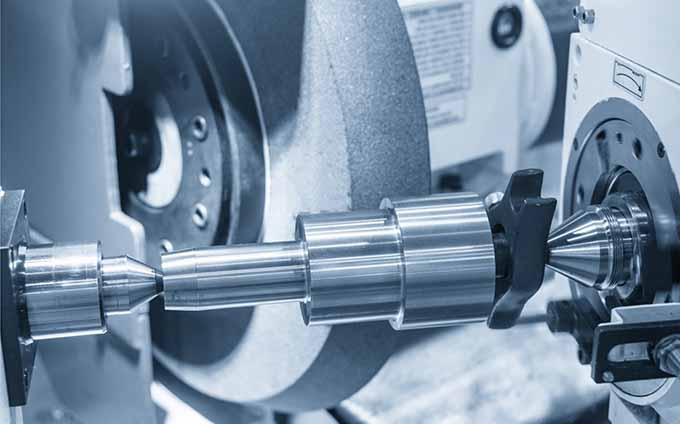
In the relentless world of extreme industrial manufacturing, oil and gas exploration, and heavy-duty mining, the margin for error is microscopic. The efficiency of your operation often comes down to the millimeter-scale contact point between a cutting tool and an unforgiving substrate. For procurement managers, process engineers, and tool manufacturers, understanding the intricate mechanics behind your tooling is not just a technical exercise—it is a critical business strategy.At the forefront of this industrial battleground are Polycrystalline Diamond Cutters (PDC). However, not all PDC cutters are created equal. Two cutters that look identical to the naked eye can exhibit wildly different lifespans and performance metrics on the field. What causes this discrepancy? This comprehensive engineering guide delves into the exact variables that dictate PDC performance, helping B2B buyers and technical teams source the most reliable, high-performance polycrystalline diamond tools for their specific industrial applications.
Evaluating a PDC cutter requires looking beneath the surface. The performance of these superabrasive tools is governed by a delicate balance of material science and manufacturing precision. Here are the six critical factors that determine how a cutter will perform in the field.
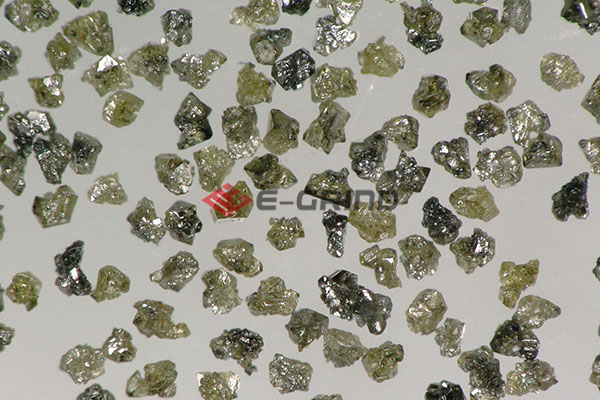
The fundamental building block of the PDC layer is the polycrystalline diamond powder used during synthesis. The physical size of these diamond grains—and how tightly their distribution is controlled—dictates the cutter's primary behavioral characteristics.There is an inherent trade-off in grain sizing:
Fine Grain: Provides a remarkably dense structure with high wear resistance and a razor-sharp cutting edge, resulting in a better surface finish. However, it is generally more brittle.
Coarse Grain: Offers higher impact resistance and toughness, making it ideal for smashing through uneven rock formations, but it wears down slightly faster and leaves a rougher finish.
Multimodal (Mixed) Grain: Modern premium cutters often use a sophisticated blend of coarse, medium, and fine grains to achieve a balanced performance profile.
Grain Size vs. Typical Performance
| Grain Size | Wear Resistance | Impact Resistance | Typical Performance / Best Use |
| Fine Grain | Excellent | Lower | Better surface finish, precision machining |
| Medium Grain | Very Good | Very Good | Balanced performance, general drilling |
| Coarse Grain | Good | Excellent | Higher impact resistance, hard rock mining |
The thickness of the polycrystalline diamond table is a critical design parameter. A thicker diamond layer generally provides a longer service life and better wear resistance because there is simply more superabrasive material available to be consumed.However, increasing the thickness is not a universal solution. A thicker diamond layer increases the residual stress at the interface between the diamond and the carbide substrate, elevating the risk of delamination under heavy impact. Furthermore, thicker layers mean a higher manufacturing cost. For certain high-precision machining applications, a thinner, highly refined diamond layer is actually preferred to maintain extreme edge sharpness.
In high-speed machining and deep-well drilling, friction generates massive localized heat, often exceeding 700°C. At these temperatures, conventional PDC cutters suffer from thermal degradation. The cobalt catalyst used during the HPHT sintering process has a much higher thermal expansion coefficient than the diamond itself. When heated, the cobalt expands rapidly, causing thermal cracking within the diamond table and leading to catastrophic cutter failure.High-performance PDC cutters possess enhanced heat resistance. This is often achieved through a proprietary "leaching" process, where the cobalt is chemically removed from the top surface of the diamond layer after sintering. This creates a deeply leached, thermally stable PDC cutter capable of maintaining stable cutting behavior at high temperatures without micro-cracking. Such advanced structures are often referred to as thermally stable polycrystalline diamond, a material specifically engineered to withstand severe thermal loads encountered in deep drilling and high-speed machining applications.
Not all cutting environments are smooth. In mining, drilling through interbedded rock formations, or interrupted cutting scenarios in CNC machining (like milling a slotted component), the cutter is subjected to violent, repeated shocks.Impact resistance and toughness determine whether the cutter will cleanly shear the material or shatter under the sudden force. High-toughness PDC cutters are engineered with specialized interface designs and tailored diamond grain blends so they do not easily chip or spall, making them much more suitable for harsh, unpredictable working conditions.
The mechanical and chemical bond between the ultra-hard diamond table and the impact-absorbing tungsten carbide substrate is the cutter's most vulnerable point. The quality of this bonding layer directly determines structural stability, overall cutter lifespan, and failure resistance.To mitigate delamination (the diamond layer peeling off the substrate), advanced manufacturers utilize non-planar interface designs. Instead of a flat surface, the interface is engineered with complex geometric patterns (like deep grooves, concentric rings, or starburst shapes). This increases the surface area for bonding and helps dissipate residual stress during heavy impacts.
A single excellent PDC cutter is useless if the next ten in the batch fail prematurely. Excellent manufacturers possess advanced sintering technology, utilizing massive cubic presses that maintain absolute uniformity in temperature and pressure.Furthermore, strict quality control, rigorous batch traceability, and advanced precision inspection systems (like ultrasonic scanning to detect internal voids) ensure that every single cutter performs identically to the last. This consistency is the true hallmark of an elite B2B supplier.
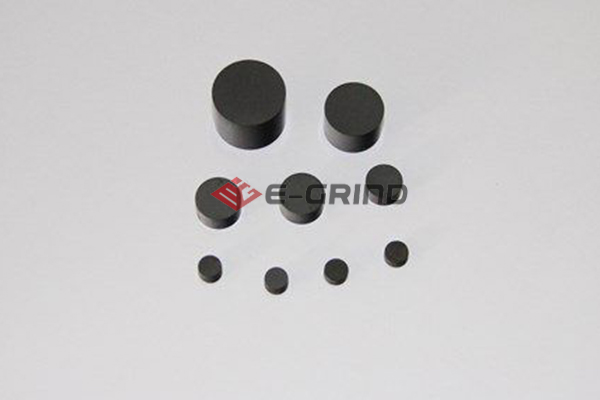
Because the variables of PDC manufacturing can be tightly controlled, engineers can tailor the properties of the cutter to match the exact demands of the end-user application.
Deep-earth drilling is arguably the most punishing environment for tooling. Cutters on a drill bit face a combination of extreme frictional heat and sudden impacts from hard rock stringers. The primary focus here is deep-leached heat resistance and advanced impact resistance to prevent the cutter from thermal-cracking or spalling miles underground. Modern polycrystalline diamond cutters used in oil and gas drilling are specifically optimized to balance thermal stability, toughness, and wear resistance under these extreme downhole conditions.
Mining equipment dealing with coal, sandstone, or limestone deals with highly abrasive environments. The PDC cutters must prioritize extreme abrasion resistance to maintain their profile, alongside high toughness to survive collisions with harder, unpredictable geological inclusions.
When turning aluminum engine blocks or milling carbon-fiber-reinforced polymers (CFRP) in aerospace applications, heat is less of an issue, but precision is paramount. Cutters designed for machining prioritize extreme edge sharpness and strict dimensional consistency to ensure tight tolerances and flawless surface finishes.
PDC is increasingly used in non-cutting applications, such as high-pressure nozzles, bearing surfaces, and measuring gauge tips. In these scenarios, the focus is entirely on long-term durability and stable performance against constant, low-impact sliding friction.Application vs. Key Required Property
| Industrial Application | Key Required Property | Primary Failure Risk if Ignored |
| Oil & Gas Drilling | Thermal stability & Impact | Heat-induced micro-cracking |
| Mining Tools | Abrasion resistance & Toughness | Rapid edge blunting, spalling |
| Precision Cutting | Edge sharpness & Consistency | Poor surface finish, dimensional drift |
| Wear Components | Long-term friction durability | Premature component wear |
For procurement teams deciding whether to upgrade from standard tungsten carbide to polycrystalline diamond, understanding the exact performance multipliers is crucial. While carbide is tough, it simply cannot compete with the wear resistance of a diamond matrix.
| Feature | PDC Cutters | Conventional Carbide Tools |
| Hardness | Extremely High (~8000 HV) | Moderate (~1500-2000 HV) |
| Wear Resistance | Excellent (Up to 100x longer) | Standard |
| Tool Life | Exceptionally Long | Shorter (Requires frequent changes) |
| Cutting Speed | High (Boosts productivity) | Medium (Prone to thermal wear) |
| Heat Resistance | Better (Especially if leached) | Lower (Loses hardness at high temps) |
The demands of modern engineering are pushing PDC technology to new frontiers. As industries drill deeper and machine tougher alloys, the superabrasives industry is responding with rapid innovations:
Ultra-hard Composite Materials: Development of nano-polycrystalline diamond structures that eliminate the need for cobalt binders entirely, offering unparalleled hardness.
Improved Thermal Stability: Advanced, multi-stage deep-leaching technologies that remove cobalt deeper into the diamond table without compromising the cutter's structural integrity.
AI-Driven Precision Machining: Artificial intelligence is being used to optimize the geometric design of the non-planar interfaces and predict the optimal grain mixtures for specific rock formations or aerospace alloys.
High-Efficiency Drilling Technologies: Specifically shaped PDC cutters (such as conical, ridged, or chisel-shaped cutters) that plow and fracture rock more efficiently than traditional flat-cylinder designs.
The trajectory is clear: future industrial manufacturing will rely heavily on the continuous advancement of high-performance PDC cutters to meet efficiency and environmental goals.


 English
 日本語
日本語 한국어
한국어 français
 Deutsch
 Español
 italiano
 русский
 português
 العربية
 tiếng việt